Employment Opportunities
Our Vision
Rooted in Dakota values, Prairie Island Indian Community will be a forward-thinking, sovereign nation focused on achieving unity, prosperity, and security for our Tiwahe (family).
Our Mission
Prairie Island Indian Community will achieve our Tribal vision by embracing innovation to ensure well-being of our Tribal Members, to honor those who came before us, and to prepare for the next seven generations.
Current Employment Opportunities
If you have questions, please contact:
Bailey Saas, Human Resources Coordinator
Office 1-800-554-5473 Ext. 4121
E-mail: Bailey.Saas@piic.org
Request for Bids
Snow Removal and Landscaping Services
SERVICES REQUIRED:
The Prairie Island Indian Community (“PIIC”), a federally recognized Indian tribe, is seeking proposals for snow removal and landscaping services.
This Request for Bids (“RFB”) and services are governed, as applicable, by the laws of PIIC, including the Tribal Employment Rights Ordinance.
QUALIFICATIONS:
PIIC will accept bids from qualified snow removal and landscape services individuals or companies with capacity to meet the Scope of Services.
The successful bidder must show proof of any necessary licensure.
The successful bidder is required to carry acceptable insurance. A certificate indicating coverage levels must be submitted and accepted before a service agreement is signed.
Upon selection and pursuant to a service agreement, the successful bidder must agree to indemnify and hold PIIC harmless from any and all claims, demands, damages, actions, or causes of action, arising or to arise, against PIIC by reason of the successful bidder’s performance of the agreement and use of any process, machinery, or material used in the performance of the agreement.
SCOPE OF SERVICES:
All services will be performed at PIIC’s senior living facility, Tinta Wita Tipi, located at
24240 130th Avenue, Welch, MN 55089.
Snow removal:
• The successful bidder must furnish all labor, materials, equipment, tools, and services to perform plowing, salting, shoveling, and snow removal services as described and per industry standards. The successful bidder is expected to provide services after two (2) inches or more of snowfall or upon a call‐out request by designated Tinta Winta Tipi staff. Due to the need to have access, the successful bidder must be able to provide services in a timely manner from emergency walkways and driveways/parking lots to ensure continual access to these areas throughout the duration of snowfall.
Landscaping:
• The successful bidder must furnish all labor, materials, equipment, tools, and services to perform landscaping services per industry standards, including:
o Spring clean-up: Removal of debris, such as leaves, dead branches, dead plants, etc., that accumulated over the winter.
o Bed/Lawn maintenance: Routine removal of weeds from decorative beds and lawn area, in adherence with PIIC’s chemical weed control preferences.
o Weekly lawn mowing and trimming of bushes and overgrown shrubs, including disposal of waste.
o Fall clean up: Leaf collection and removal of dead perennial materials.
o Mulch replacement (only as needed).
SUBMISSIONS:
Submissions should be sent via email to courtney.vanvooren@fairview.org, by May 3, 2024.
Bidders can include a joint bid on snow removal and landscape services, separate bids, or bid on only snow removal or only landscape services.
Bids should outline payment terms and timing details. The successful bidder will be required to enter into a service agreement memorializing terms and conductions.
PIIC reserves the right to reject submissions where the available evidence or information does not satisfy PIIC that the bidder is qualified to properly carry out the Scope of Services consistent with industry standards.
CONTACT INFORMATION:
If you have questions related to this request or to submit a bid, please contact Courtney Van Vooren, Tinta Wita Tipi Executive Director, at courtney.vanvooren@fairview.org, or 651-385-3535.
Request for Candidate Submissions
Human Resources Manager – Cannabis Company
OPENING DATE: March 28, 2024
SUBMISSION DEADLINE: April 10, 2024
ANTICIPATED START DATE: May 1, 2024
Prairie Island CBH, Inc., a Prairie Island Indian Community corporation, is seeking qualified candidates for a Human Resources Manager. Prairie Island CBH, Inc., is responsible for all the Community’s commercial cannabis businesses. The Human Resources Manager will report to the Board of Directors for Prairie Island CBH, Inc.
The Human Resources Manager would provide support to Prairie Island’s cannabis dispensary including staffing and human resource information systems. The Human Resources Manager will directs and coordinate human resources activities, such as employment, compensation, labor relations, benefits, enterprise-wide training and certifications, and employee services. The Human Resources Manager will be expected to assist in the development of employee benefits packages, and must be passionate about employee training and education.
This will be a full-time contract position pre-opening, with the intent of full-time employment with the opening of the business.
Duties and Responsibilities:
The following duties and responsibilities are not meant to be all inclusive and may be adjusted to meet business needs.
- Maintain and improve a human resources system that meets the organization’s needs
- Responsible for all aspects in the hiring process, including development of job descriptions, advertising and recruitment for open positions, background checks and all paperwork affiliated with the hiring and onboarding process
- Responsible for all aspects of the employee life-cycle of employment including onboarding, training, annual reviews, progressive discipline, and terminations.
- Facilitate on-going staff training and maintain employee certifications, through tracking of expirations, coordination of trainings, and distribution of materials.
- Makes suggestions for changes in employee management procedures
- Work with the Dispensary Manager and employees on an as-needed basis to prevent and solve employee problems. This may include individual consultation as well as group counseling to assist the manager in promoting respect, effective communication and positive working relationships.
- Oversee the analysis, maintenance and communication of records required by law or governing bodies.
- Assist the Dispensary General Manager with progressive disciplinary actions, writing improvement plans for employees, and facilitating terminations.
- Conduct inquiries/lead investigations related to employee complaints
- Maintain employee records
- Handle all unemployment claims
- Consult legal counsel to ensure that policies comply with federal law, state law, and tribal ordinances.
- Analyze wage and salary reports and data to determine competitive compensation plan
- Provide interim management and staff oversight as needed
- Other duties as assigned
Qualifications:
Required:
- Bachelors degree in Human Resources, Business or related field and five (5) years of progressive professional human resources experience or equivalent combination of education/experience.
- Employee training experience
- Problem resolution and critical thinking skills
- Excellent interpersonal skills, strong listening skills
- Integrity, maturity, dependability and strong work ethic
- Strong analytical skills with high attention to detail
- Sound judgement and problem solving skills
- Ability to manage departmental budget and control labor expenses
- Familiar with employment and labor laws
- Ability to maintain strict standards of confidentiality
- Excellent written and verbal communication skills
- Strong computer skills Microsoft Office (Word, Excel and Outlook)
- Ability to work independently and effectively with minimal supervision
- Ability to work well within the existing team and government structure
- Sensitive to Native American Culture
- Must pass a criminal background check
- Valid driver’s license and proof of insurability
Preferred:
- HR experience in government and/or tribal setting
- Legal cannabis market experience
- Professional in Human Resources (PHR) or SHRM CP Certification
- Knowledge of payroll systems
- HRIS navigational skills
- Experience with compensation programs
Working Environment:
- Work is performed primarily in an office setting, but may include occasional participation in the retail part of the business
- The position may qualify for a partial hybrid remote work environment based on business needs
- Physical Demands:
o Must be able to sit for long periods of time with occasional amounts of standing or walking
o Must have the ability to lift and carry up to 25 pounds
Compensation:
Submitted proposals should clearly indicate specific hourly fees, costs and/or billing rate(s) for work conducted under the Scope of Work, including varying rates, if any, for the individuals who will be performing any services and/or varying rates, if any, for services performed.
The PIIC may select individuals for interview from among those submitting proposals and reserves the right, prior to awarding a contract, to request additional information if warranted.
Submission Instructions:
To be considered for this position, a Candidate must submit the following items, in electronic form, to info@honestcannabis.com by the submission deadline established above.
The Community reserves the right to reject any incomplete submission, and to request additional or supplementary information from the Candidates.
Proposal Item |
Description |
|
1 |
Letter of Interest |
A letter clearly introducing the Candidate, explaining the Candidate’s interest in the position, and explaining why the Candidate should be selected |
2 |
Resume or Statement of Qualifications |
A resume or Statement of Qualifications describing the Candidate’s qualifications relative to the position |
3 |
Release of Information and Background Check Authorization Form |
An executed Release of Information and Background Check Authorization Form (included with this Request for Submissions) |
Request for Proposals
Associate Tribal Court Judge
Associate Tribal Court Judge for the Prairie Island Indian Community
OPENING DATE: March 11, 2024
SUBMISSION DEADLINE: Open until filled
The Prairie Island Indian Community is a federally-recognized Indian tribe (the “Tribe”), located in southeastern Minnesota along the banks of the Mississippi River, approximately 30 miles from the Twin Cities of Minneapolis and St. Paul. The Tribe is seeking proposals from qualified professionals to serve as an Associate Judge for the Prairie Island Mdewakanton Dakota Tribal Court (“Tribal Court”).
SCOPE OF WORK:
The Associate Judge shall carry out the duties and obligations of the office in accordance with the Tribe’s Constitution and Courts Ordinance (both available at http://prairieisland.org/gover...). The Courts Ordinance outlines the role of the Court and the duties of the Judges.
The Tribal Court system includes a trial and appellate level, and hears a wide variety of civil cases that include, but are not limited to, child welfare, guardianships and conservatorships, custody and divorce proceedings, land disputes, election challenges, and contractual or other civil disputes. The Associate Judge is expected to be available year-round and be able to preside over hearings at the Tribal Court located on the Prairie Island Indian Reservation. The Associate Judge will preside over cases where the Chief Judge has a conflict, or as otherwise assigned by the Chief Judge. The Associate Judge must prepare and issue written orders and judgments. The Associate Judge must keep accurate records of cases and court hearings. The Associate Judge will be expected to conduct research and recommend updates to the Judicial Code, and to assist in the development of Tribal Court policies and procedures.
The terms and compensation for this position will be set forth in the negotiated agreement between the Associate Judge and the Tribe.
EVALUATION CRITERIA:
Candidates must submit: (1) a cover letter, (2) resume or biographical information, (3) two writing samples, and (4) three references. Candidates’ submissions must demonstrate that he or she has the ability to execute the duties and obligations outlined in the Tribe’s Judicial Code and the Constitution.
Specific consideration will be given to a candidates’:
- Experience as a judge/justice in tribal, state or federal systems;
- Experience as a legal practitioner in tribal, state or federal systems;
- Experience with child welfare, guardianships and conservatorship cases;
- Knowledge of Indian and Federal law; and
- Written and oral communication skills.
Educational requirements are not proscribed by the Constitution or Judicial Code, but a four-year degree, and relevant schooling including a juris doctorate degree, are preferred. Prairie Island tribal member and Native American preference applies.
PIIC HANDLING OF PROPOSALS:
Proposals will be reviewed by a proposal evaluation team. The proposal evaluation team shall evaluate the proposals in accordance with the “Evaluation Criteria” section of this Request for Proposals. Based on this evaluation, candidates will be contacted for in-person interviews. Final issuance of this contract will be subject to the negotiation of mutually-agreeable terms.
IMPORTANT CONTRACT INFORMATION:
Submissions and inquiries regarding the Associate Judge position may be directed to:
Bailey Saas, Human Resources Coordinator
Prairie Island Indian Community
5636 Sturgeon Lake Road Welch, MN 55089
Office: 1-800-554-5473, ext. 4121
E-mail: Bailey.Saas@piic.org
Clean-Up Month Monitor (May 2 - May 21)
The Clean-up month monitor (the Monitor) is a limited-term position dedicated to a three week period in the month of May (May 2 thru May 21st). The primary duty of the Monitor is to ensure quality control of the drop-off site located behind the Prairie Island Public Safety Building within the fenced impound area. The duties are to monitor waste drop-off, ensuring patrons dispose of waste in the proper dumpsters and that patrons place waste to the back of the dumpsters ensuring that space is efficiently utilized. The Monitor must communicate regularly with project oversight staff to inform of any challenges, if dumpsters need to be emptied by the vendor, or waste within dumpsters to be consolidated with large equipment. Monitor must be able to have good interpersonal skills when communicating with patrons. Hours are 9am - 5pm, Tuesdays thru Saturdays only (off Sundays and Mondays). Monitor is required to be present for all scheduled workdays and hours throughout the 3-week period.
Please send inquires to Gabe Miller at Gabriel.Miller@piic.org
Educational Guides
REQUEST FOR PROPOSALS
Prairie Island Indian Community
Educational Guides
SERVICES REQUESTED:
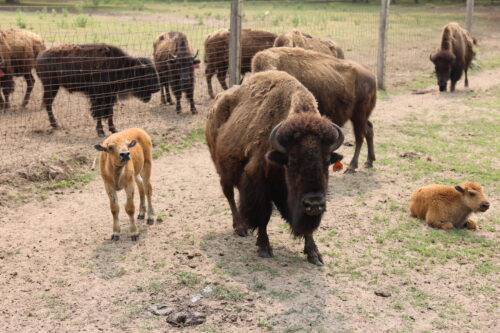
The Prairie Island Indian Community (“PIIC”), is seeking Community members to serve as Educational Guides to lead tours of the Buffalo Project and the Bark Lodge located on the Prairie Island Indian Reservation.
SCOPE OF WORK:
The Community currently offers educational tours to various groups and individuals that are intended to share about the Community’s Buffalo Project and Bark Lodge. These range from school groups, visiting Tribes and organizations, and elected leaders from Federal or State government. The Guides would lead the tours, educate, and share knowledge about the Prairie Island Indian Community, the buffalo relatives, and Dakota culture and history.
The goal is to engage 3-5 Community members who can be Educational Guides on an as-needed or on-call basis. There is currently a script that will be provided, however, the Guides will be asked to contribute to further developing the script and materials to share on the tours.
These are independent contractor positions, and the selected Guides will be expected to enter into an independent contractor agreement with the Community. This RFP and independent contractor agreement are governed, by the laws of the Prairie Island Indian Community.
QUALIFICATIONS:
- Know, or ability to learn, information regarding the Buffalo Project and Bark Lodge, in order to share it with tour attendees;
- Must be at least 18 years old;
- Must pass a federal criminal background check in compliance with the Indian Child Protection and Family Violence Prevention Act and the Adam Walsh Child Protection and Safety Act; and
- Ability to be available on an “on-call basis” to give tours during the week and/or weekend.
COMPENSATION:
- A stipend or compensation will be awarded
SUBMISSIONS:
Submissions in response to this RFP should include a letter of interest that includes any relevant experience, or why the responding Community member should be selected.
Submissions should be sent via email to TribalAdministrator@piic.org. Submissions will be accepted until the need is filled.
If you have questions related to this Request for Submissions, please contact Melanie Urich, Tribal Administrator, at (651) 385-4116, or Margo Bellanger, Deputy Tribal Administrator, at (651) 267-4057.
This RFP and the contract for services will be governed, as applicable, by the laws of the Prairie Island Indian Community, including the Tribal Employment Rights Ordinance.
Family Spirit Program Coordinator
Request for Proposal (RFP): Family Spirit Program Coordinator/Home Visiting Supervisor
Tribe/Reservation Name: Prairie Island Indian Community (Mdewakanton Dakota)
Position Summary:
The Family Spirit Program Coordinator/Home Visiting Supervisor will be responsible for serving as principal advisor and coordinator of the Family Spirit Project. The Family Spirit Program Coordinator will exercise responsibility for planning, developing, evaluation and coordinating all program activities related to the Family Spirt Project in partnership with the Prairie Island Health Center. The Program Coordinator is to work directly with the Family Health Services Director providing administrative and consultative support as directed. This position serves as the primary contact for tribal members needing services regarding the home visiting program utilizing the Family Spirit Program and Family Nurture Program for community members meeting program criteria. The Family Spirit Program Coordinator will supervise certified tribal consultants who will serve as Family Spirit Health Educators. The Family Spirit Program Coordinator will recruit and work directly with young mothers through home visits to enhance prenatal care and support for expectant mothers and children up to three years.
Scope of Work: Introducing the newly initiated Home Visiting Program by the Prairie Island Indian Community Family Health Department (PIICFHD). This program incorporates the evidence-based and culturally tailored Family Spirit Program and Family Nurture Program. Family Spirit is an evidence-based home visiting program developed for and with Native American communities. Developed by the Johns Hopkins Center for Indigenous Health in partnership with tribal communities, Family Spirit optimizes local cultural assets and resources.
The PIICFHD model aligns the Prairie Island Health Clinic with certified tribal consultants, assuming roles as Family Spirit Health Educators. Program coordination is overseen by the Family Spirit Program Coordinator. Additionally, the reach of the PIICFHD Family Spirit program extends beyond Minnesota through the inclusion of a telehealth option, enabling access for Tribal Members located outside the state.
Prairie Island Indian Community (PIIC) is soliciting proposals from qualified contractors for the role of Family Spirit Program Coordinator/Home Visiting Supervisor. The contractor shall be responsible for completing required training to become a certified Family Spirit Health Educator. Contractor will be expected to utilize the curriculum materials and resources and reach out to for ongoing technical assistance and to tailor implementation to local needs. The Family Spirit Core Curriculum consists of 63 lessons taught from pregnancy to age 3, with plans for expanded curriculum through age 5.
The contractor will be responsible for recruiting young mothers to participate in the Family Spirit Program and will serve as the supervisor for the Family Spirit project in PIIC. Along with recruitment of young mothers, contractor will arrange visits of young mothers in their homes and teach a comprehensive parenting curriculum. Contractor will provide social support and connect young mothers to other community resources; recruit, train and monitor a team of home visiting staff to ensure quality programming and continuous progress towards goals. Contractor will meet frequently with the Family Health Educators individually and as a team to review case management and facilitate reflective practice.
Experience working in Native communities is preferred. This RFP and the contract for services will be governed, as applicable, by the laws of the Prairie Island Indian Community, including the Tribal Employment Rights Ordinance.
Project Location: Majority of the work performed will be in-home visits. Documentation of home visits can be performed in the field or contractor’s home. Meetings and trainings will take place at the Prairie Island Indian Community Administration Building (address below).
Address: 5636 Sturgeon Lake Road, Welch, MN
Project Tasks:
Responsibilities may include, but are not limited to:
- Serve as a supervisor for the Family Spirit project in the Prairie Island Indian Community (PIIC).
- Recruit young mothers to participate in the Family Spirit Program.
- Visit young mothers in their homes and teach a comprehensive parenting curriculum.
- Provide social support and connect young mothers to other community resources.
- Recruit, train and monitor a team of home visiting staff to ensure quality programming and continuous progress towards goals.
- Meet frequently with the Family Health Educators individually and as a team to review case management and facilitate reflective practice.
- Coordinate all communication internally and externally about the project.
- Represent the Family Spirit Program and the organization’s other programs during community meetings and in-service presentations for community partners and local service providers.
- Manage process data to track daily progress of visits completed, data collected, referrals made, etc.
- Complete reports as required by funding agencies, the model developer, etc.
- Travel to other sites for trainings, meetings and other duties as needed.
- Assist with other organization activities as needed.
Deliverables:
Provide a monthly report to the Nutritionist and the Family Health Director including:
- Completion of trainings by all staff.
- Recruitment activities.
- Number of visits to homes of young mothers.
- Report/Share accomplishments, obstacles and other observations encountered during home visits and in recruitment efforts.
Qualifications:
- High School Diploma or GED required. Bachelor’s degree in a health or social services field preferred. Experience may substitute for education.
- Minimum of one (1) year of work, school or volunteer experience beyond high school required.
- Ability to speak Dakota language preferred.
- Minimum of 2 years in a supervisory role preferred.
Skills
- Strong organizational and data management skills and experience
- Efficient and detail-oriented
- Independent learner and worker
- Flexible and adaptable
- Ability to effectively multi-task
- Self-motivated and driven
- Excellent professional judgment and discretion
- Good oral and written communication skills, including public speaking with large and small groups
- Ability to operate a telephone, printer, fax, copier, and computer with software use experience in Microsoft Word, Excel, & Power Point
- Ability to drive a project vehicle as needed and to follow guidelines on vehicle use
- Ability to follow worksite guidelines on personal and work cell phone use
- Ability to work well with others
- Ability to take direction and respond positively to feedback in the workplace
Other:
- Current driver’s license issued by the state and good driving record (hired candidate will need to provide a copy of a current driver’s license in the state where the position is located)
- Ability to travel with overnight stays required as needed. Some evening and weekend work may be required.
- This position will maintain current CPR, BLS or approved alternate certification.
- This position will maintain background clearance as required by the employer and any collaborating agencies.
- Eligible to work under grant-funded programming, and able to comply with all program requirements if engaged (the Community can provide detailed requirements upon request)
Proposal Contents:
The following must be included in the proposal:
- An outline (brief) of the responder's background, training, and experience, with a particular emphasis on similar work completed for Native communities.
- A listing of the names, addresses, and telephone numbers of at least three (3) references for whom the respondent has completed a similar project.
- Expected hourly rate of pay.
Submission Instructions:
Interested proposers should submit their proposals no later than April 21, 2024 to Sarah.gorter@piic.org. Any inquiries regarding this RFP should be directed to Sarah Gorter at Sarah.gorter@piic.org or 651-385-4127.
Family Spirit Program Health Educator (Three Positions Available)
Request for Proposal (RFP): Family Spirit Program Health Educators (Three Positions)
Tribe/Reservation Name: Prairie Island Indian Community (Mdewakanton Dakota)
Position Summary:
Family Spirit Program Health Educator(s) will serve as a certified Family Health Educator for the Family Spirit and Nurture Program. The Health Educator(s) will work directly with the Family Spirit Program Coordinator/Home Visiting Supervisor to recruit and work directly with young mothers through home visits to enhance prenatal care and support for expectant mothers, potentially and children up to three years old.
Scope of Work: Introducing the newly initiated Home Visiting Program by the Prairie Island Indian Community Family Health Department (PIICFHD). This program incorporates the evidence-based and culturally tailored Family Spirit Program and Family Nurture Program. Family Spirit is an evidence-based home visiting program developed for and with Native American communities. Developed by the Johns Hopkins Center for Indigenous Health in partnership with tribal communities, Family Spirit optimizes local cultural assets and resources.
The PIICFHD model aligns the Prairie Island Health Clinic with certified tribal consultants, assuming roles as Family Spirit Health Educators. Program coordination is overseen by the Family Spirit Program Coordinator. Additionally, the reach of the PIICFHD Family Spirit program extends beyond Minnesota through the inclusion of a telehealth option, enabling access for Tribal Members located outside the state.
Prairie Island Indian Community (PIIC) is soliciting three proposals from qualified contractor(s) for the role of Health Educators. The contractor shall be responsible for completing required training to become a certified Family Spirit Health Educator. Contractor will be expected to utilize the curriculum materials and resources and reach out to for ongoing technical assistance and to tailor implementation to local needs. The Family Spirit Core Curriculum consists of 63 lessons taught from pregnancy to age 3, with plans for expanded curriculum through age 5.
The contractor will be responsible for recruiting young mothers to participate in the Family Spirit Program. Along with recruitment of young mothers, contractor will arrange visits of young mothers in their homes and teach a comprehensive parenting curriculum. Contractor will provide social support and connect young mothers to other community resources. Contractor will meet frequently with the Family Health Program Coordinator/Home Visit Supervisor individually and as a team to review case management and facilitate reflective practice.
Experience working in Native communities is preferred. This RFP and the contract for services will be governed, as applicable, by the laws of the Prairie Island Indian Community, including the Tribal Employment Rights Ordinance.
Project Location: Majority of the work performed will be in-home visits. Documentation of home visits can be performed in the field or contractor’s home. Meetings and trainings will take place at the Prairie Island Indian Community Administration Building (address below).
Address: 5636 Sturgeon Lake Road Welch, MN
Project Tasks:
- Serve as a Family Health Educator for the Family Spirit project in the Prairie Island Indian Community:
- Recruit young mothers to participate in the Family Spirit Program
- Visit young mothers in their homes and teach a comprehensive parenting curriculum
- Provide social support and connect young mothers to other community resources
- Maintain data forms and tracking logs to document study activities
- Represent the Family Spirit Program and the organization’s other programs during community meetings and in-service presentations for community partners and local service providers
- Travel to other sites for trainings, meetings and other duties as needed
- Assist with other organization activities as needed
Deliverables:
Provide routine reports to the Family Spirit Coordinator, Nutritionist and the Family Health Director including:
- Completion of required trainings.
- Recruitment activities.
- Number of visits to homes of young mothers.
- Share accomplishments, obstacles and other observations encountered during home visits and in recruitment efforts.
Qualifications:
- High School Diploma or GED required. Bachelor’s degree in a health or social services field preferred.
- Minimum of one (1) year of work, school or volunteer experience beyond high school required.
- Ability to speak Dakota language preferred.
Skills
- Strong organizational and data management skills and experience
- Efficient and detail-oriented
- Independent learner and worker
- Flexible and adaptable
- Ability to effectively multi-task
- Self-motivated and takes initiative
- Excellent professional judgment and discretion
- Good oral and written communication skills, including public speaking with large and small groups
- Ability to operate a telephone, printer, fax, copier, and computer with software use experience in Microsoft Word, Excel, & Power Point
- Ability to drive a project vehicle as needed and to follow guidelines on vehicle use
- Ability to follow worksite guidelines on personal and work cell phone use
- Ability to work well with others
- Ability to take direction and respond positively to feedback in the workplace
Other:
- Current driver’s license issued by the state and good driving record (hired candidate will need to provide a copy of a current driver’s license in the state where the position is located)
- Ability to travel with overnight stays required as needed. Some evening and weekend work may be required.
- This position will maintain current CPR, BLS or approved alternate certification.
- This position will maintain background clearance as required by the employer and any collaborating agencies.
- Eligible to work under grant-funded programming, and able to comply with all program requirements if engaged (the Community can provide detailed requirements upon request)
Proposal Contents:
The following must be included in the proposal:
- An outline (brief) of the responder's background, training, and experience, with a particular emphasis on any work completed for Native communities.
- A listing of the names, addresses, and telephone numbers of at least three (3) references for whom the respondent has completed a similar project.
- Expected hourly rate of pay.
Submission Instructions:
Interested proposers should submit their proposals no later than April 21, 2024 to Sarah.gorter@piic.org. Any inquiries regarding this RFP should be directed to Sarah Gorter at Sarah.gorter@piic.org or 651-385-4127.
Field Technician
REQUEST FOR PROPOSALS
Prairie Island Indian Community
Field Technician
SERVICES REQUIRED:
The Prairie Island Indian Community (PIIC), a federally recognized Indian tribe, is seeking proposals from Independent Contractors to work with Land and Environment as a part-time Field Technician.
QUALIFICATIONS:
The PIIC will accept proposals from interested individuals. The applicant must be able to work outdoors effectively with a team and independently with minimal supervision. Applicants must be comfortable working with small boats/canoes.
SCOPE OF WORK:
Assist the Prairie Island Land & Environment staff in conducting field work and data management with tasks including, but not limited to, displaced (invasive) species management, wildlife monitoring, natural resource surveys, GIS mapping, data entry, and other tasks as assigned. This position is part-time- up to 30 hours per week for six months. Skills in plant identification and small engine experience are preferred. Training will be provided.
OVERVIEW:
The contractor will be responsible for:
- Surveying terrestrial and aquatic plants and utilizing mapping software to record data
- Assisting the implementation of management actions (pull/dig, cut/mow, spray)
- Recording data for artificial nesting structures
- Submitting weekly reports of hours and accomplishments
- Other duties as assigned
SUBMISSIONS:
Submissions in response to this RFP should include a letter of interest, resume, and three references. The letter of interest should outline hourly fee expectations.
IMPORTANT CONTRACT INFORMATION:
Proposals should be sent via email to Keanna.Krueger@piic.org.
If you have questions related to this request or to submitting a proposal, please contact Keanna Krueger, PIIC Invasive Species Coordinator, at 651-764-3957.
Flowering Rush Monitor
REQUEST FOR PROPOSALS
Prairie Island Indian Community
Flowering Rush Monitor
SERVICES REQUIRED:
The Prairie Island Indian Community (PIIC), a federally recognized Indian tribe, is seeking proposals from Independent Contractors to monitor wild rice beds for Flowering Rush.
QUALIFICATIONS:
The PIIC will accept proposals from interested individuals. The applicant must be able to work outdoors effectively with a team and independently with minimal supervision. Applicants must be comfortable working with small boats/canoes.
SCOPE OF WORK:
Flowering rush is an aquatic invasive species from Europe and Asia. It spreads through root rhizomes and is known to have many ecological impacts including suppressing native vegetation. Flowering rush was first found in the rice beds in 2023. To protect psiƞ, the Flowering Rush Monitor will be responsible for identification, data collection, and targeted removal of flowering rush. Data collection will entail use of Field Maps to record information including date, location, abundance, and implementation of management actions. This position is part-time- up to 20 hours per week from June through September (17 Weeks). Skills in plant identification are preferred. Training will be provided.
OVERVIEW:
The contractor will be responsible for:
- Surveying aquatic plants and utilizing mapping software to record data
- Implementing management actions (pull/dig plants out)
- Submitting weekly reports of hours and accomplishments
SUBMISSIONS:
Submissions in response to this RFP should include a letter of interest, resume, and three references. The letter of interest should outline hourly fee expectations.
IMPORTANT CONTRACT INFORMATION:
Proposals should be sent via email to Keanna.Krueger@piic.org
If you have questions related to this request or to submitting a proposal, please contact Keanna Krueger, PIIC Invasive Species Coordinator, at 651-764-3957.
Forestry and Wild Rice Coordination Consultant
CLOSING DATE: April 29, 2024
SERVICES REQUIRED:
The Prairie Island Indian Community (PIIC), a federally recognized Indian tribe, is seeking proposals from Independent Contractors to create a capacity that will provide focused efforts and commitment to strong forestry and wild rice stewardship to PIIC. The impacts of this consultant will be improving health, longevity, and resilience of the forests and rice beds on tribal lands and waters with consideration of the next seven generations. Primary focus will be to revise the PIIC Forest Management Plan and including community engagement into the plan development with potential to pursue forest management action. The consultant will also facilitate plans and strategies for establishing native food trees and plants into the landscape as well as establishment of orchards throughout PIIC with the purpose of providing culturally valued foods and medicines. The contractor will facilitate Psíƞ wild rice activities and community engagement to benefit the community and wild rice in tribal waters. The impacts of this work will benefit community values, but also ecological function of the forest ecosystems.
QUALIFICATIONS:
The PIIC will accept proposals from April 22-29. The applicant must have skill and strong background in both forestry and native wild rice. The applicant must have practical knowledge in forestry management and planning; a bachelor’s degree is preferred but not required. The forestry aspect of this request requires strong assessment and technical writing skills. Regarding the wild rice aspect of this role, the applicant must demonstrate experience in working with wild rice in one or more of the following aspects: restoration, harvesting, research, law/policy, but with significant consideration to an applicant with traditional ecological knowledge related to wild rice in Native American culture. The applicant should also be able to demonstrate strong skills in community level outreach, education as well as activism. There is also an aspect of food sovereignty in this work; the applicant must have practical knowledge of traditional and contemporary food forest and can facilitate related planning and implementation.
SCOPE OF WORK:
The scope of this work consists of, but not entirely limited to the following tasks:
- Forest Management Plan
- Research past work and maps of previous forestry work.
- Work with BIA foresters in revising the PIIC Forest Management Plan (Plan)
- Expand capacity to possibly include timber stand improvement (TSI) as a stewardship option for forest health.
- Engage Community member support in Plan revisions and decision-making
- Investigate traditional ecological knowledge (TEK) in establishing stewardship methods within the Plan
- Cultural Tree/Shrubs to be considered in Plan revisions for food sovereignty initiative (orchards/food forests)
- Determine need to conduct and (if deemed appropriate) follow-thru with new Forest inventory(ies) on tribal forests (been >10 yrs since last inventory)
- Orchard/ Food Forest Establishments
- In direct collaboration with food sovereignty staff and involved community members, consider the following needs, feasibility of, and establishment of food/medicine trees/shrubs in orchards or food forests within tribal lands
- Engage community member support in developing locations, layouts, species selection, etc. for orchards/food forests
- Native options: crab apple, hawthorns, hazelnut, native nut trees (walnut, hickory, oak), coffee-tree, nannyberry, plums, cherries, etc.
- Cultivated options: apple, pear, peach, kiwi, pecan, non-native hickories (i.e. shellbark hickory), etc.
- Wild Rice coordination – monitoring, community engagement, etc.
- Optional – pursue grant opportunities and co-write grants for above work (ex. BIA Forest Development and related funding sources)
- Facilitate and lead Community engagement opportunities related to this work
SUBMISSIONS:
Submissions in response to this RFP should include a letter of interest, resume, and three references. The letter of interest should outline hourly fee expectations.
IMPORTANT CONTRACT INFORMATION:
Proposals should be sent via email to bailey.saas@piic.org
If you have questions related to this request or to submitting a proposal, please contact Gabe Miller, Environmental Program Manager, at 651-385-4141.
Dated this 17th day of April 2024
Kitchen Assistant
Request for Proposal (RFP) – Kitchen Assistant
Department: Family Health Services Department
Employment Status: 1 Full-time or 2 Part-time
Summary: The Prairie Island Indian Community (PIIC) is seeking proposals from qualified candidates for the position of Kitchen Assistant. The successful candidate will primarily support the Culinary Coordinator in the Title VI Elder Nutrition Program, aiding in meal preparation for homebound Elders and congregate meals, kitchen maintenance, and assisting in event planning for community-based activities. Additionally, the Kitchen Assistant will contribute to the Tribe's food sovereignty objectives in collaboration with the PIIC Food Sovereignty Team.
Duties and Responsibilities: The selected candidate will be responsible for the following:
- Assisting with the preparation of Congregate and Home-Delivered Meals, including food prepping and delivery coordination.
- Maintaining cleanliness and sanitation of Meal Site kitchens and dining areas.
- Cooking and preparing meals in the absence of the Culinary Coordinator.
- Participating in menu preparation, inventory management, and ordering supplies.
- Assisting in data collection and reporting for the Title VI program.
- Ensuring compliance with Tribal, Department, and Program policies.
- Performing other tasks within the scope of work as required.
Qualifications: The proposer must meet the following minimum qualifications:
- Possession of a High School Diploma or Equivalent.
- Minimum one (1) year of experience in food service or food preparation for large groups.
- Proficiency in Microsoft Word, Excel, and computer skills.
- Willingness to travel to deliver food to homebound Elders.
- Food Handler's certification (or ability to obtain within 90 days of employment).
- Ability to work independently and within a team.
- Successful completion of a drug screen (UA) and federal background check.
- Possession of a valid driver’s license and proof of auto insurance.
- Eligible to work under federally grant-funded programming, and able to comply with all program requirements if engaged (the Community can provide detailed requirements upon request)
Physical Demands: The proposer must demonstrate the ability to:
- Lift and carry up to 50 pounds without difficulty.
- Stand, walk, or sit for extended periods throughout the day.
Required Training:
- Effectively Handling Harassment training.
- Any position-related training as determined by the supervisor.
Working Environment: Work primarily takes place indoors with possible exposure to extreme weather conditions.
Disclaimer and Conditions of Employment: All employees must be able to perform the essential job functions satisfactorily. Reasonable accommodations will be made for employees with disabilities, as required. The Prairie Island Indian Community Tribal Employment Rights Ordinance applies to all employment opportunities.
Submission Instructions: Interested proposers should submit their proposals no later than April 21, 2024 to Sarah.gorter@piic.org. Any inquiries regarding this RFP should be directed to Sarah Gorter at Sarah.gorter@piic.org or 651-385-4127.
Licensed Therapy Services
REQUEST FOR PROPOSALS
Licensed Therapy Services
for the Prairie Island Indian Community
SERVICES REQUIRED:
The Prairie Island Indian Community (PIIC), a federally recognized Indian tribe, is seeking proposals from a licensed therapist to enter into an independent contractor arrangement for providing individual, family or group therapeutic services to members of the community.
QUALIFICATIONS:
The PIIC will accept proposals from firms and individuals who perform therapy services and qualify as a licensed Clinical Social Worker or a licensed Marriage and Family Therapist with the State of Minnesota, and have experience working with diverse populations, teens, children, and family systems. The professional should also have experience in: individual and family therapy; facilitating group sessions in the areas of anxiety, depression and/or grief; and therapy for issues related to sexual abuse, historical trauma and domestic violence.
SCOPE OF WORK:
Provide professional therapeutic services as needed to members of the PIIC, in coordination with the PIIC Family Services Department.
OVERVIEW:
The consultant will be responsible for:
1. Providing individual therapy sessions;
2. Providing family therapy sessions;
3. Performing group facilitation in the areas of depression, anxiety, and grief;
4. Performing diagnostic assessments on a very limited bases (approximately 5-7 per year) and writing clinical recommendations regarding clients upon request.
5. Collaborate with PIIC staff regarding grant programs, and comply with all terms of applicable grants.
6. Providing detailed / itemized monthly invoices identifying the work completed and the basis for any charges to the PIIC.
7. Trained or willingness to be trained to perform CASII assessment tool on a very limited basis (approximately 2-3 times per year) upon request
FEES:
Submitted proposals should clearly indicate specific hourly fees, costs and/or billing rate(s) for work conducted under the Scope of Work, including varying rates, if any, for the individuals who will be performing any services and/or varying rates, if any, for services performed.
The PIIC may select firms or individuals for interview from among those submitting proposals and reserves the right, prior to awarding a contract, to request additional information if warranted.
PIIC HANDLING OF PROPOSALS:
Proposals furnished to the PIIC will be evaluated by a proposal evaluation team. The proposal evaluation team shall evaluate the proposals in accordance with the “Selection Criteria for Award” section of this Request for Proposals. Based on this evaluation, a firm(s) or individual(s) will be contacted for in person interviews. Upon selection, the final award is subject to the negotiation of a professional services contract. The contract will be governed, as applicable, by the laws of the Prairie Island Indian Community. Appropriate insurance for therapy providers will be required.
IMPORTANT CONTRACT INFORMATION:
Proposals, with the requested information, must be received by the Prairie Island Indian Community Tribal Council, 5636 Sturgeon Lake Road, Welch, MN 55089 or can be submitted via e-mail to PIIC Family Services Director Anne Turnbull at anne.turnbull@piic.org
If you have questions related to this request or to submitting a proposal, please contact PIIC Family Services Director Anne Turnbull at anne.turnbull@piic.org.
CLOSING DATE: Open until filled
Part-Time Registered Dietitian
Request for Proposal (RFP) - Part-Time Registered Dietitian Services for Prairie Island Health Center
The Prairie Island Indian Community (PIIC) is seeking proposals from qualified and experienced registered dietitians with current credentials for the State of Minnesota to provide part-time services specifically tailored to individuals with diabetes at the Prairie Island Health Center (PIHC). The selected dietitian will be responsible for delivering expert nutritional guidance, education, and support to our patients, promoting optimal health outcomes for those managing diabetes, developing detailed nutritional care plans; providing nutritional consulting services to patients; assessing nutritional needs related to several types of diabetes; interviewing techniques and patient care management; providing nutritional education to individuals, families, and community groups. In addition, the contractor will be responsible for oversight of the federal grant program Special Diabetes Program for Indians (SDPI). This includes completion of all required SDPI training, execution of all project-related activities, timely submission of reports and evaluations, and rigorous expenditure monitoring to guarantee compliance with Indian Health Service standards. This RFP and the contract for services will be governed, as applicable, by the laws of the Prairie Island Indian Community, including the Tribal Employment Rights Ordinance.
Project Overview:
PIIC is a reputable healthcare provider committed to delivering high-quality care to our community, with a focus on the unique healthcare needs of the Native American population. We are currently seeking a Part-Time Registered Dietitian with expertise in diabetes management to join our team and provide services two days a week at the Prairie Island Health Center. Work involves delivering nutritional services to the population as part of comprehensive healthcare program, and providing and evaluating nutritional services for individuals and program on continuing basis. The work has direct effects on quality of life and health for medical patients and their families and the results also affect the promotion of health and the prevention of disease for all ages of the population served and improvements in nutritional services or programs provided to the local community.
Scope of Services:
The selected Part-Time Registered Dietitian will be required to perform the following services:
- Conduct nutritional assessments for patients with diabetes.
- Develop personalized dietary plans to manage and prevent complications associated with diabetes.
- Provide individual and group nutritional counseling sessions.
- Collaborate with other healthcare professionals within the clinic to ensure integrated and comprehensive patient care.
- Stay up-to-date with the latest research and best practices in diabetes management and nutrition.
Requirements:
The ideal candidate should meet the following criteria:
- Registered Dietitian credentials with current licensure for the State of Minnesota.
- Demonstrated experience in working with patients diagnosed with diabetes.
- Knowledge of and sensitivity to the cultural and health needs of the Native American population.
- Strong communication and interpersonal skills.
- Availability to work two days a week at the PIHC.
- Eligible to work under grant-funded programming, and able to comply with all program requirements if engaged (PIIC can provide detailed requirements upon request).
Proposal Submission:
Interested candidates are invited to submit their proposals by April 5, 2024. The proposal should include the following:
- Cover letter expressing interest and summarizing relevant experience.
- Resume detailing qualifications and experience.
- Description of previous experience working with diabetes patients.
- Proposed schedule for providing services two days a week at the Prairie Island Health Center.
- Proof of current Registered Dietitian credentials for the State of Minnesota.
- Valid Driver’s License.
- Three professional references.
Please submit your proposal to Melanie Urich at Melanie.Urich@piic.org by April 5, 2024.
Evaluation Criteria:
Proposals will be evaluated based on the following criteria:
- Relevant experience and expertise in diabetes management.
- Cultural competence and understanding of the unique healthcare needs of the Native American population.
- Proposed schedule and availability.
- Proof of current RD credentials for the State of Minnesota.
- Professional references.
Prairie Island Indian Community Peacemaker
REQUEST FOR PROPOSALS
Prairie Island Indian Community Peacemaker
SERVICES REQUIRED:
The Prairie Island Indian Community (PIIC), a federally recognized Indian tribe, is seeking proposals from qualified individuals or organizations to provide peacemaker services aimed at mediating and resolving conflicts within our community. The peacemaker will be responsible for facilitating dialogue, promoting understanding, and fostering peaceful resolutions to disputes and tensions among Community Members.
This Request for Proposals (“RFP”) and the contract for services will be governed, as applicable, by the laws of PIIC, including the Tribal Employment Rights Ordinance.
Prairie Island Indian Community is committed to promoting harmony, understanding, and cooperation within our community. However, we recognize that conflicts and disagreements may arise from time to time, and we believe that the services of a skilled peacemaker can help us address these issues in a constructive and positive manner.
QUALIFICATIONS:
The PIIC will accept proposals from individuals and organizations who possess the following:
• Proven experience in conflict resolution and mediation, preferably in community settings
• Strong communication and interpersonal skills, with the ability to remain neutral and impartial
• Knowledge of mediation and negotiation techniques, as well as an understanding of cultural sensitivity and diversity
• Relevant certifications or training in conflict resolution, mediation, or peacemaking well as an understanding of cultural sensitivity and diversity. - Relevant certifications or training in
Applicants also should be eligible to work under grant-funding programming and able to comply with all grant requirements, if engaged (PIIC can provide detailed requirements, upon request).
SCOPE OF WORK:
The selected peacemaker(s) will be expected to perform the following:
• Mediate disputes and conflicts between individuals, groups, or organizations within the community
• Facilitate dialogue and communication between conflicting parties to promote understanding and empathy
• Help parties involved in disputes to identify common ground and work towards mutually acceptable solutions
2
SUBMISSIONS:
Submissions in response to this RFP should include a letter of interest, resume, and three references. The letter of interest should outline hourly fee expectations.
IMPORTANT CONTRACT INFORMATION:
Proposals should be sent via email to deb.english@piic.org
If you have questions related to this request or to submitting a proposal, please contact Deb English, Tribal Court Administrator, at 651-385-4161.
Dated this 7th day of February, 2024
Tribal Building Code Consultant Services
Request for Proposal:
Tribal Building Code Consultant Services
The Prairie Island Indian Community (PIIC or Tribe) is a Federally Recognized Tribe in Minnesota. PIIC is seeking a proficient and reliable consultant to advise the Tribe in making updates and improvements to its Building Code to benefit the health, safety, and environmental goals of the community. The consultant will collaborate closely with PIIC departments to research, consider, recommend, and implement code amendments and compliance systems. PIIC will work with the selected consultant to develop an appropriate timeline, targeting early 2024 for project kick-off. This RFP and the consultant contract will be governed, as applicable, by the laws of the Prairie Island Indian Community, including the Tribal Employment Rights Ordinance.
Scope of Consultant Activities
The selected consultant will engage in a range of pivotal activities, including:
- Understanding content and context of PIIC existing building codes.
- Researching and advising PIIC on potential improvements to the code language, including:
- Structural and topical components of codes; and
- Content of codes, including references to external sources and/or custom material.
- Developing draft custom codes language as identified above.
- Assisting PIIC in establishing code compliance and administration procedures, processes, roles, resources, and fees.
- Project management and stakeholder engagement.
Minimum Qualifications
Applicants for the consultant role should possess the following qualifications:
- A track record in performing the above requested services related to federal, state, tribal, and/or local building codes.
- Preferred candidates would have direct experience working with tribes to develop building codes that align with international and state codes.
- Proficiency in navigating the breadth and intricacies of building codes, including competency with the following essential areas:
- Construction specialties: structural, mechanical, plumbing, electrical, fire and life safety, energy conservation/green building.
- Building types: commercial, residential, manufactured/prefabricated structures
- Applications: new construction, renovation.
- A demonstrated aptitude for generating meticulous building code-related deliverables.
- Exceptional communication skills, capable of fostering effective collaboration and adaptability in dynamic environments.
- Outstanding project management and organizational skills.
- Eligible to work under grant-funded programming, and able to comply with all grant requirements if engaged (PIIC can provide detailed requirements upon request)
- Relevant professional licensing and certifications strongly encouraged.
Submission Requirements
Proposals should address the following:
- Ability to provide services for the identified scope of work.
- Ability to meet the minimum (and preferred) qualifications.
- Resumes of key staff, highlighting relevant experience and qualifications.
- Fee structure, encompassing the rates for the proposed consulting services
Submit RFP responses by 5:00pm CST on Wednesday, February 14, 2024 to Andrea.Zimmerman@piic.org.
Employee Benefits
We offer a comprehensive and competitive benefit package for all regular, full-time employees. Benefits include the following:
• Free, on-site medical clinic for employees enrolled in our medical plan
• Variety of free prescription medications
• Paid time off – vacation, sick and holiday pay
• 13 paid holidays plus 2 paid half-day holidays
• Retirement – 401(k) retirement plan with employer match
• Health & wellness coverage – medical, dental and vision coverage
• Flexible spending accounts – healthcare and dependent care reimbursement accounts
• Life insurance – employer paid basic life insurance
• Supplemental life and accidental death and dismemberment (AD&D) insurance
• Supplemental coverage – short-term, long-term disability, and accident
• Generous paid bereavement leave
• Identity theft protection
• Education reimbursement opportunities – for pre-approved specific, job-related education
• Employee assistance program (EAP) – face-to-face counseling, legal assistance, financial assistance, ID recovery, tobacco cessation, dependent care and daily living resources, and crisis consultation
• Health club reimbursement
• Free access to onsite fitness center
• Employee fuel discount
With the exception of Indian preference, it is the policy of the Prairie Island Indian Community to grant equal employment opportunity to all qualified persons without regard to race, color, sex, or national origin. This policy is based upon the philosophy of the Equal Employment Act of 1996. Indian preference applies for all employment vacancies pursuant to Prairie Island Indian Community Tribal Employment Rights Ordinance (TERO), approved by Tribal Council Resolution 22-11-02-202.
Prairie Island Indian Community is a drug-free work environment.
Core Values
Bdewakantuŋwaŋ - Those born of the water
Woksape - Wisdom
Wowaȟbada - Peace or Calm
Waciŋic’iya - Self dependence
Akhidečheča - Equality
Wowacaŋtohnake - Generosity
Oahe - Foundation